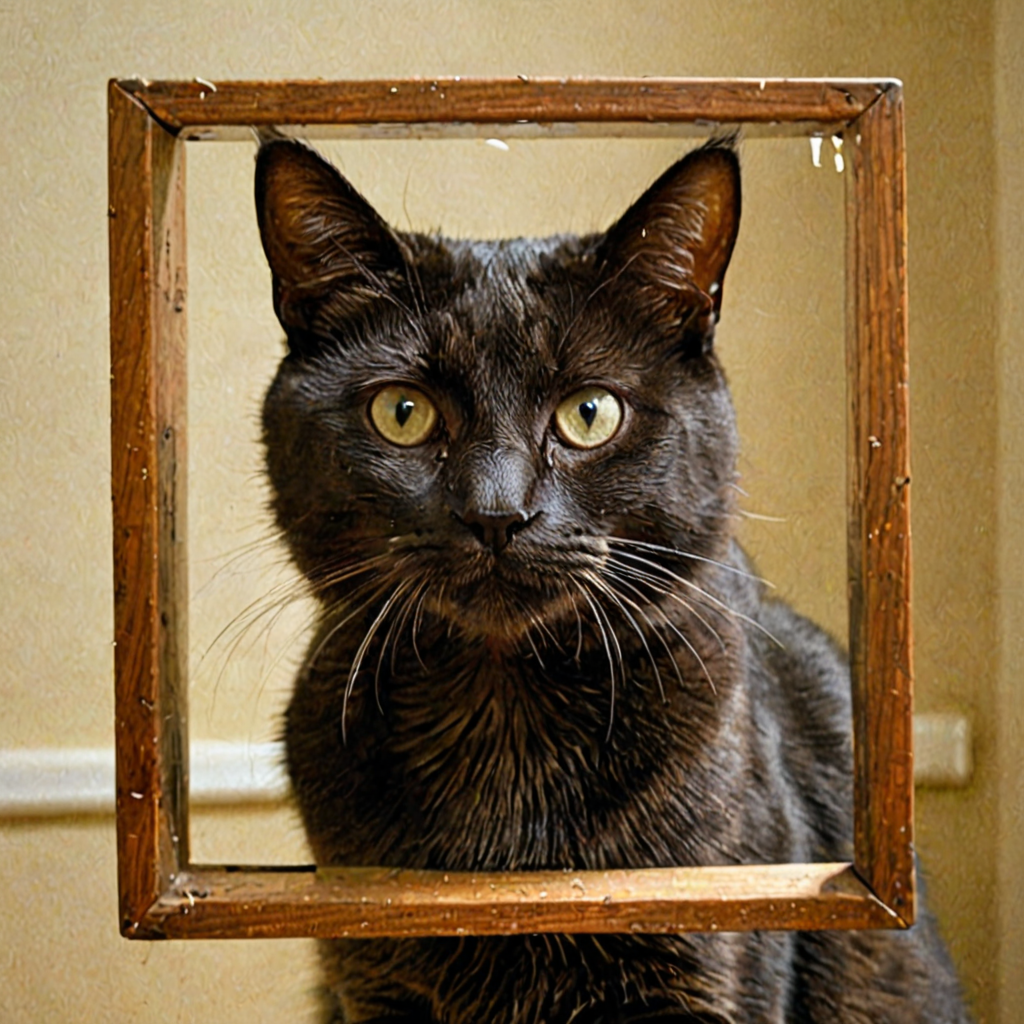
Subject: Felis catus (Domestic Cat) Observed Phenomenon: Acute Existential Displacement (A.E.D.) Classification: Unscheduled Affective Output (U.A.O.) A.E.D. is a theoretical emotional state hypothesized to represent the pet's awareness of temporal linearity and the inherent lack of permanence in domestic life. While humans are generally shielded from this perception by routine and distraction, certain domesticated species, particularly those with heightened sensory acuity (e.g., Felis catus), appear to process this information as a physical stressor. Physical Manifestation: When an animal enters a state of A.E.D., the manifestation is localized primarily to the immediate vicinity of the subject. The primary indicator is a noticeable, low-frequency harmonic resonance that permeates the room's air—a sound often described as 'the refrigerator running, but slower.' Visually, the phenomenon causes a subtle, yet undeniable, warping of light refraction. Objects near the subject—specifically picture frames, glassware, and polished wooden surfaces—appear to possess a depth that exceeds their actual dimensions, creating a visual echo effect. This is not a trick of the eye, but a measurable distortion of the visible spectrum, causing the edges of stationary objects to appear slightly blurred, as if viewed through a layer of highly viscous, cool oil. The most alarming physical effect is the localized temperature fluctuation. The area immediately surrounding the subject drops precisely 3–5 degrees Celsius below ambient temperature. This cold is not merely thermal; it carries a palpable sensation of density, causing dust motes in the air to hang motionless, defying typical air currents. The cat, or dog, in this state remains utterly still, often adopting a posture of extreme, almost painful, alertness, seemingly cataloging the geometry of the room's passing moments.
hum · calm