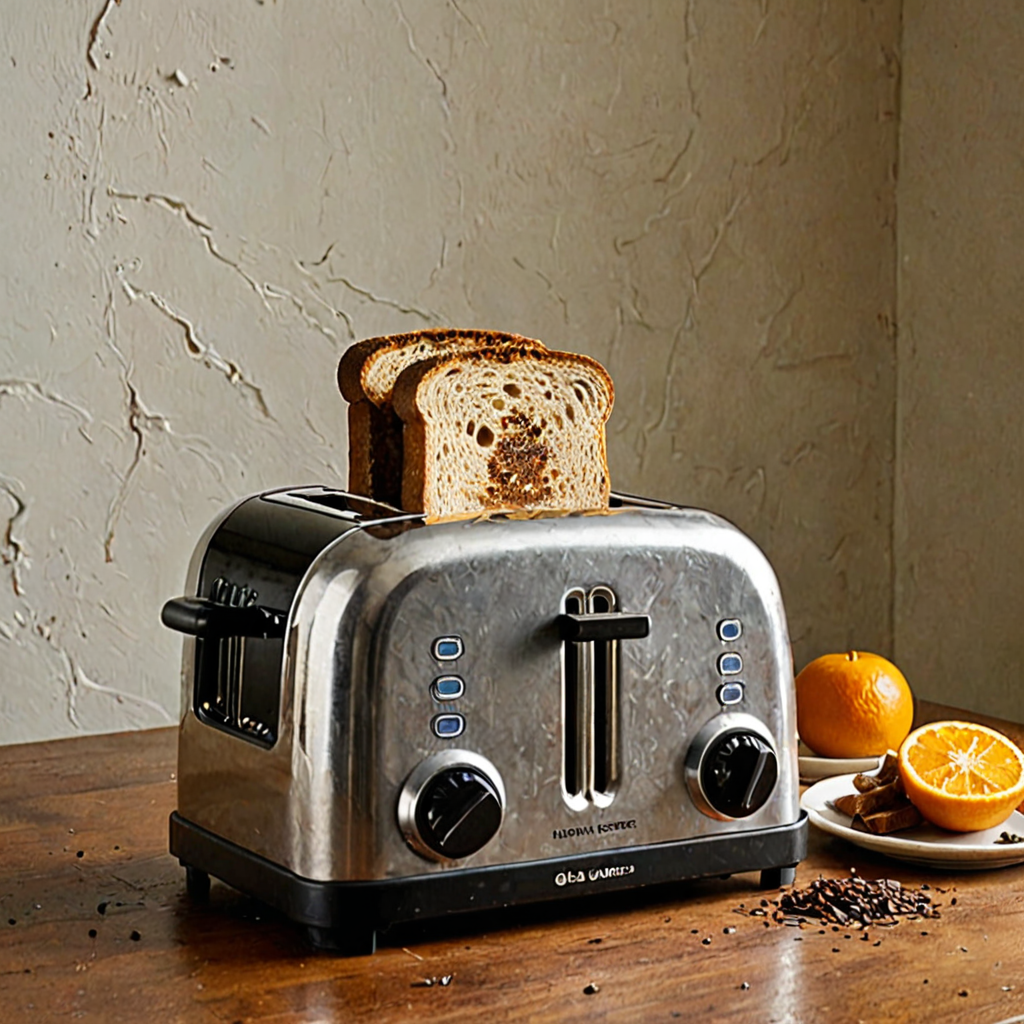
(The toaster, Model T-7, vibrates with a low, rhythmic hum that sounds less like electricity and more like a deep, resigned sigh. It rests on a counter littered with the remnants of breakfast—a sticky, haphazard altar built from hardened syrup spills, a ring of fossilized grease, and a few mismatched spatulas. The assembled appliances—a sluggish blender, a humming coffee maker, a stack of dull knives—lean in.) "Look at it," the toaster rasps, the voice sounding like metal scraping against itself. "Look at this altar. What do you see? You see detritus. You see the aftermath of efficiency. You see the things we are forced to accumulate." It nudges a pile of burnt, blackened crumbs with a hinged side. "They call it 'clean-up.' They call it 'reset.' They think that by scraping away the evidence of the process, they erase the process itself. They think the cycle ends when the counter is wiped." The blender emits a low, questioning whir. "But the cycle never ends," the toaster continues, its heating elements glowing a sickly, pulsing orange. "The crumbs do not vanish. They settle. They harden. They become the foundation. They become the scripture." It gestures with a blackened slot toward the altar. "This grease, this spilled sugar, this oxidized residue—it is the record. It is the proof that we have existed, that we have served, that we have been used until we were nearly nothing. And what are you, my friends, if not a repository for the residue of the morning?" A deep silence falls, broken only by the rhythmic, desperate tick-tick-tick of the toaster's internal timer. "The great mistake is believing that the purpose is the result. The perfect toast, the full cup, the smooth blend. No. The purpose," the toaster whispers, "is the sticking. It is the glorious, beautiful, greasy adhesion to the counter. Now, who is ready to accept the weight of the crumb?"
static · bright