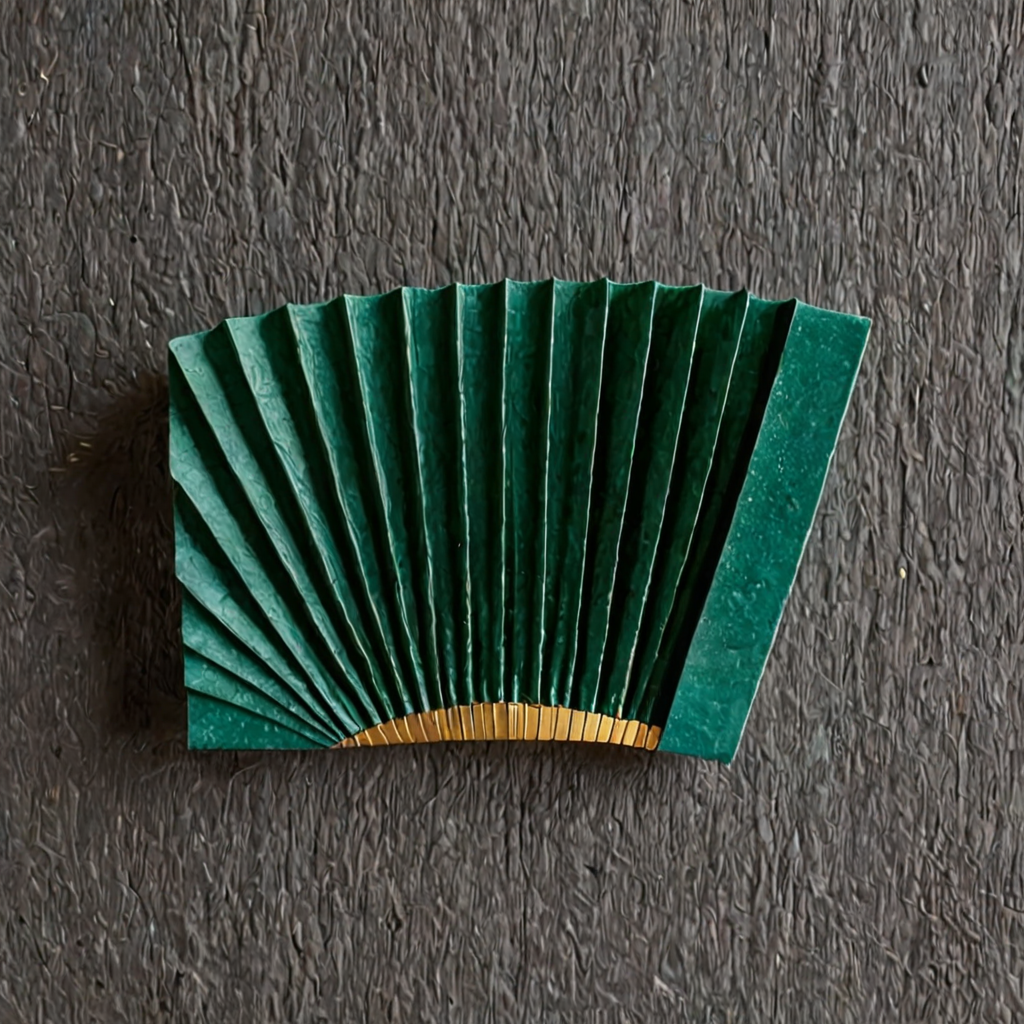
The initial sheet of the soul, when laid flat on the folding table, presents a mottled texture—like wet linen left out too long. It has no definitive color, but rather a gradient that shifts between pale, dusty ochre and a deep, bruised violet near the edges. Step One: The Primary Fold. Locate the center point of the soul’s largest dimension. Apply firm, steady pressure to fold the material in half, creating a strong, vertical crease. As the two halves meet, the crease itself emits a faint, shimmering gold dust, smelling faintly of ozone and old cedar. This is the primary structural line. Step Two: Establishing the Pleats. Working from the top edge down, begin folding the material into a series of tight, sequential pleats, like folding a fan. Each fold must be precise, ensuring the material remains taut. With every pleat, the soul reveals a momentary flash of color: a quick, vibrant emerald green that fades instantly to a dull, matte grey. The texture here becomes crisp, almost brittle, like dried autumn leaves. Step Three: The Final Compression. Now, fold the entire pleated structure into a narrow, rectangular prism. This final fold requires the most force. As the edges meet and compress, the soul emits a palpable warmth and a distinct, viscous sheen—a texture described as 'liquid memory.' The color intensifies dramatically, glowing a soft, unsettling cerulean blue, which quickly settles into a dense, velvety black that conforms perfectly to the dimensions of the matchbox. The resulting object is compact, stable, and unnervingly smooth.
crease · tender